
A Common and Frustrating Garage Door Problem
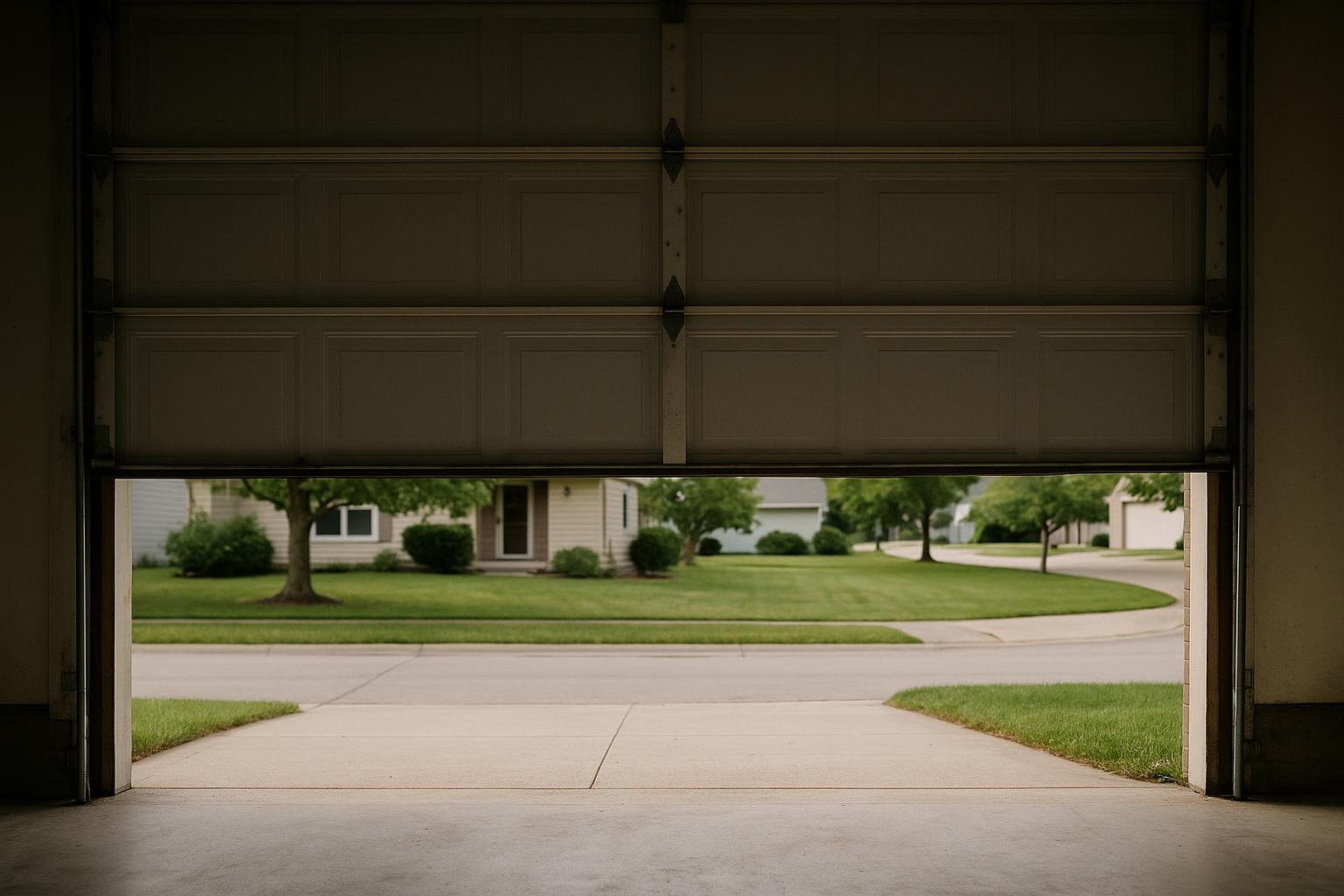
You press the button on your remote, the garage door starts its descent, and then — just before it reaches the floor — it reverses and goes right back up. You try again. Same thing. Maybe it works on the third attempt, or maybe it doesn't work at all.
This is one of the most common garage door issues homeowners in Zion deal with, especially as seasons change and temperatures swing from Lake Michigan cold to summer heat. The good news is that this problem almost always has a clear, fixable cause. The bad news is that ignoring it can lead to bigger, more expensive repairs down the road.
Let's walk through the most likely reasons your garage door reverses before closing and what you can do about each one.
1. Misaligned Safety Sensors
This is the number one cause of a garage door that reverses before hitting the ground. Every modern garage door opener manufactured after 1993 is equipped with two photo-eye safety sensors mounted near the base of the door tracks, about six inches off the floor. These sensors send an invisible beam across the opening. If anything breaks that beam — a child, a pet, a trash can — the door automatically reverses to prevent injury or damage.
The problem is that these sensors can easily get bumped, knocked out of alignment, or covered in dirt and cobwebs. When the beam is disrupted for any reason, the opener interprets it as an obstruction and reverses the door.
What to check:
- Look at both sensors. Most models have a small LED light on each one. If one light is blinking or off, that sensor is likely misaligned.
- Gently clean the lens on each sensor with a soft cloth.
- Check that both sensors are pointed directly at each other. Even a slight shift can break the beam.
- Make sure no objects, leaves, or debris are blocking the path between the sensors.
If you've cleaned and realigned the sensors and the problem persists, the wiring between the sensors and the opener may be damaged. That's a job best left to a professional.
2. Incorrect Close-Limit Settings
Your garage door opener has close-limit settings that tell it how far the door should travel before it's considered fully closed. If these settings are off — set too far, for example — the opener thinks the door has hit something when it reaches the floor and triggers the auto-reverse.
This is especially common after a new opener installation or if someone has recently adjusted the settings. On most openers, the close-limit adjustment is a small screw or dial on the back or side of the motor unit.
What to do:
- Consult your opener's manual for instructions on adjusting the close-limit switch.
- Make small adjustments — usually quarter turns — and test the door after each change.
- If you're not comfortable making these adjustments, our team at Zion Garage Door can dial in the settings quickly during a service call.
3. Worn or Damaged Rollers and Tracks
Over time, the rollers that guide your garage door along the tracks can wear out, crack, or accumulate grime. When this happens, the door doesn't travel smoothly. The opener senses the extra resistance and interprets it as an obstruction, triggering the reversal.
Similarly, bent or misaligned tracks can create friction points that cause the same reaction. Homeowners in areas like Zion and Waukegan sometimes see track issues after particularly harsh winters, when ice buildup or accidental impacts from snow blowers and shovels can knock things out of alignment.
Signs to look for:
- Grinding, scraping, or squealing noises during operation
- Visible damage or bends in the metal tracks
- Rollers that appear cracked, chipped, or don't spin freely
Replacing rollers is a relatively affordable repair that can dramatically improve your door's performance. Upgrading to nylon rollers can also reduce noise — a nice bonus if your garage is attached to your home.
4. Broken or Weakening Springs
Your garage door springs do the heavy lifting — literally. They counterbalance the weight of the door so the opener doesn't have to work as hard. When springs weaken or break, the door becomes much heavier for the opener to manage. The opener may struggle to hold the door's weight on the way down and reverse as a safety precaution.
Spring issues are particularly common in the Lake County area where temperature fluctuations cause the metal to expand and contract repeatedly, accelerating wear. If your door feels noticeably heavier when you lift it manually, or if you see a gap in one of the torsion springs above the door, you likely need a spring replacement.
Important safety note: Garage door springs are under extreme tension and can cause serious injury if handled improperly. Spring replacement should always be performed by a trained technician. This is not a DIY repair.
5. Problems with the Opener's Force Settings
In addition to limit settings, your opener has force settings that control how much power it uses to open and close the door. If the downward force is set too low, the opener won't push hard enough to close the door completely and will reverse instead.
This can happen gradually as springs age and the door effectively becomes heavier for the opener to move. A small adjustment to the force setting can sometimes resolve the issue, but it's important to get it right. Setting the force too high can create a safety hazard, as the door may not reverse when it actually encounters an obstruction.
6. Weather Stripping or Threshold Seal Interference
Here's one that surprises a lot of homeowners. New or swollen weather stripping along the bottom of the door can create just enough resistance when the door meets the floor to trigger the auto-reverse. The same goes for aftermarket threshold seals installed on the garage floor.
If you recently replaced your bottom seal or installed a threshold strip and the reversing problem started around the same time, this is likely your culprit. A minor adjustment to the close-limit or force settings usually solves it.
When to Call a Professional
Some of these fixes — cleaning sensors, checking for obstructions — are simple enough for any homeowner to handle. But if you've gone through the basics and your door is still reversing, it's time to call in a pro. Electrical issues, spring problems, and opener malfunctions require the right tools, training, and experience to diagnose and repair safely.
At Zion Garage Door, we see this exact issue multiple times a week. Our technicians serving Zion, Beach Park, Gurnee, Winthrop Harbor, and the surrounding communities can usually diagnose and fix the problem in a single visit. We'll also inspect the rest of your system to catch any developing issues before they turn into emergencies.
Don't Let a Reversing Door Become a Bigger Problem
A garage door that won't close all the way isn't just annoying — it's a security risk. An open garage is an invitation for theft, pests, and weather damage. It also means your opener is working harder than it should, which shortens its lifespan.
If your garage door keeps reversing and you can't figure out why, give us a call. We offer prompt, honest service and we'll get your door closing properly again — no guesswork, no unnecessary upsells, just the repair you actually need.